Henry Newell Cady (1849-1935) Lived/Active: Rhode Island
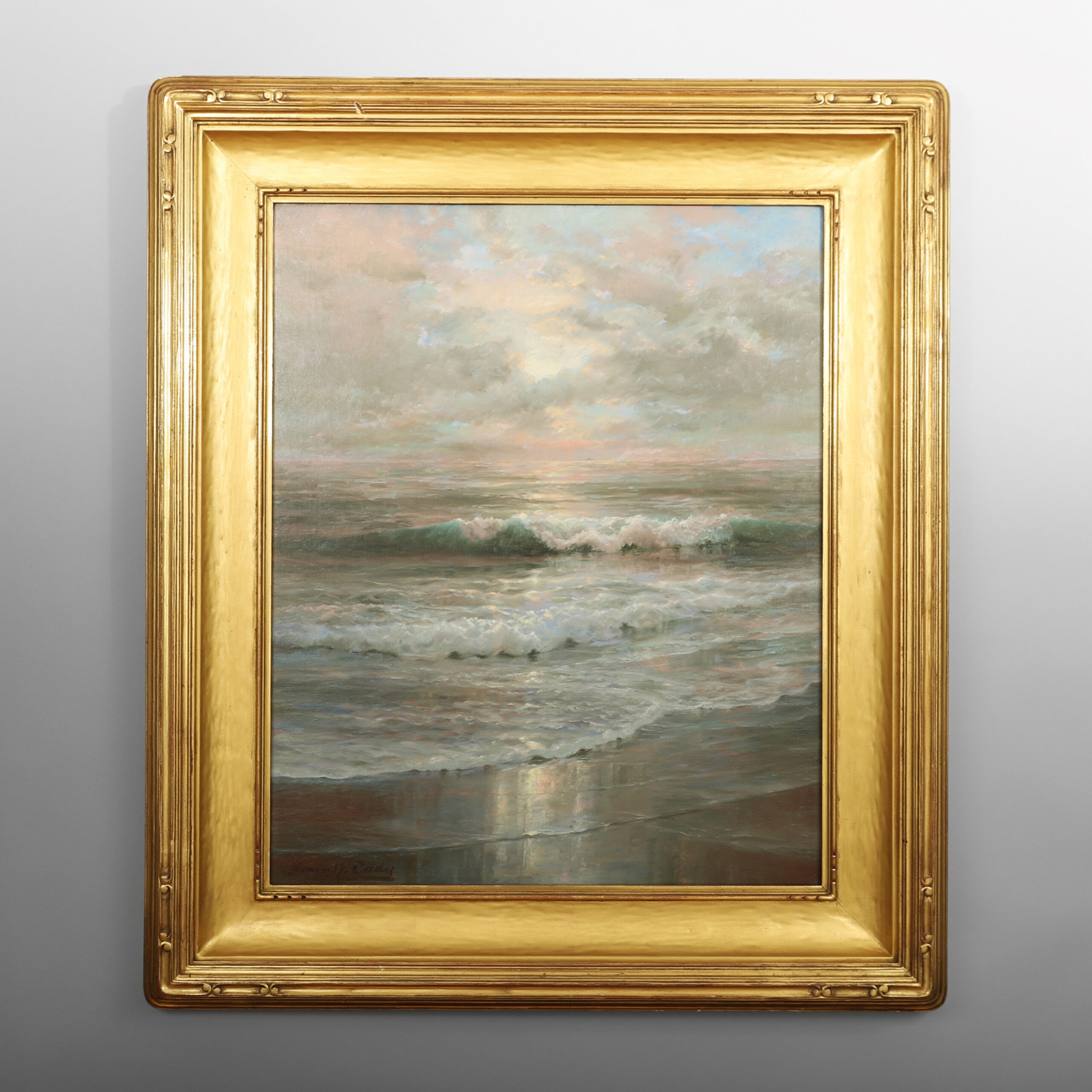
Beach at Sunset, California or Beach Scene
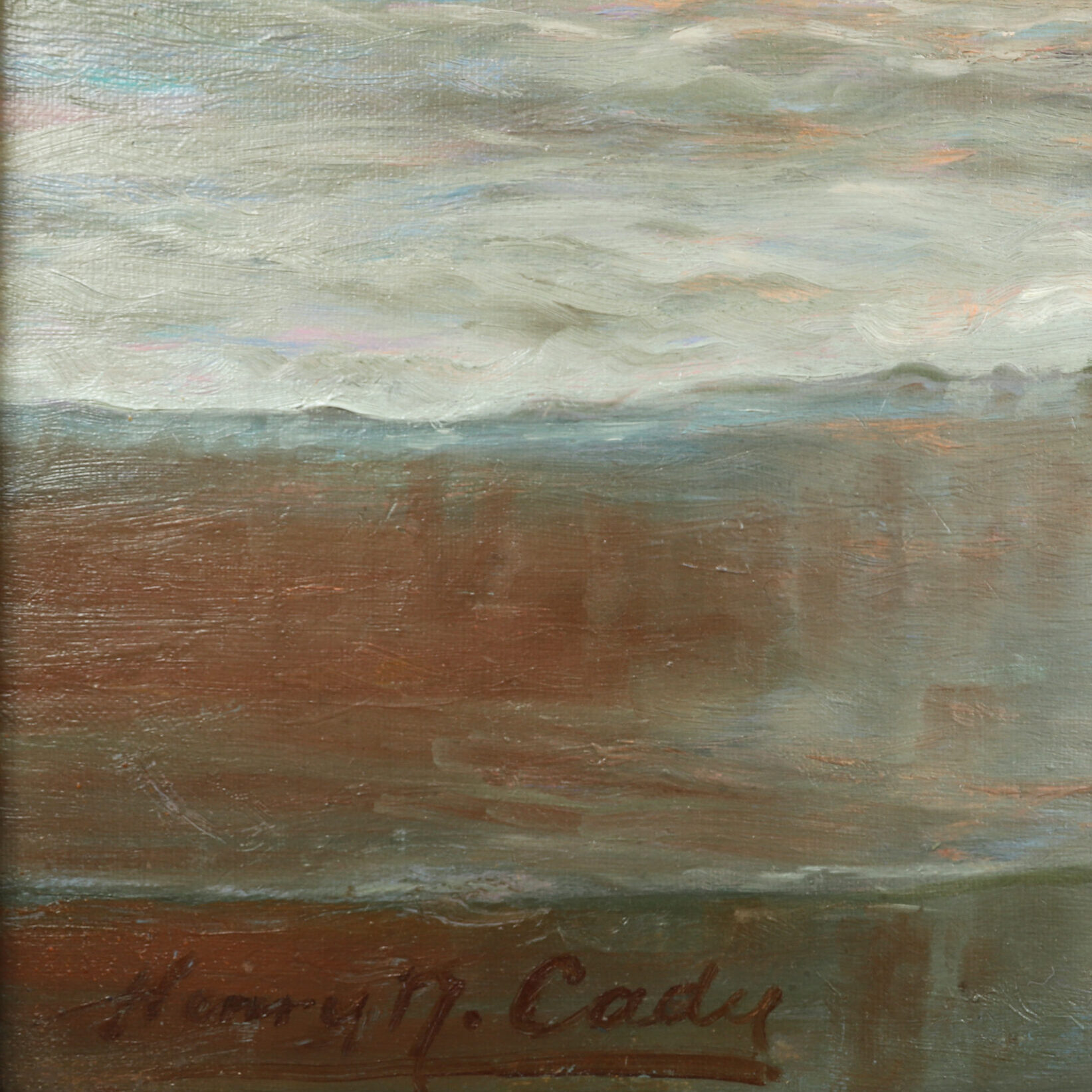
Signed (l.l.): Henry N. Cady
Oil on canvas
27 ¼” x 22″, 36 ½” x 31 ½” (frame)
Over-all in fine condition, lined; a few small touches of inpainting. Housed in a custom gilt frame.
Provenance: Spanierman Gallery, LLC, New York.
Best known for his seascapes of the New England coastline with a sensitive touch for capturing the effects of sky and sunlight conditions as they affected the sea and rocky shoreline in ever-changing rhythms, Henry Newell Cady was self-taught as an artist and apparently honed his skill at an early age while developing his reputation for mastering light on the sea. Born in Warren, Rhode Island to a high school principal father, Cady grew up in an environment that encouraged both study and practice.
Cady illustrated for many magazines and books. His works were exhibited at the Chicago World’s Fair in 1893, the St. Louis Exposition in 1904, and the Exposition of American Artists in Springfield, Massachusetts. In more recent years, retrospectives of Cady’s work have been held at the Palazzo Strozzi in Florence, Italy, in 1985, and in 1996 at the Bert Gallery in Providence, RI.
Luminism was a mid to late 19th century American style of landscape painting primarily characterized by a keen interest in the effects and movement of light on the landscape. An offshoot of the Hudson River School, Luminist painters often chose aquatic scenes as their subjects, and used aerial perspectives to highlight the vibrant interplay between the horizon, nearby flora or shorelines, and the sunlight reflected on the water. Luminism has been considered to represent a contemplative and poetic perception of nature. The term luminism was retroactively applied by art historians of the 1950’s.