Morris Henry Hobbs (1892-1967) Lived/Active: Illinois, Ohio, Louisiana, Europe
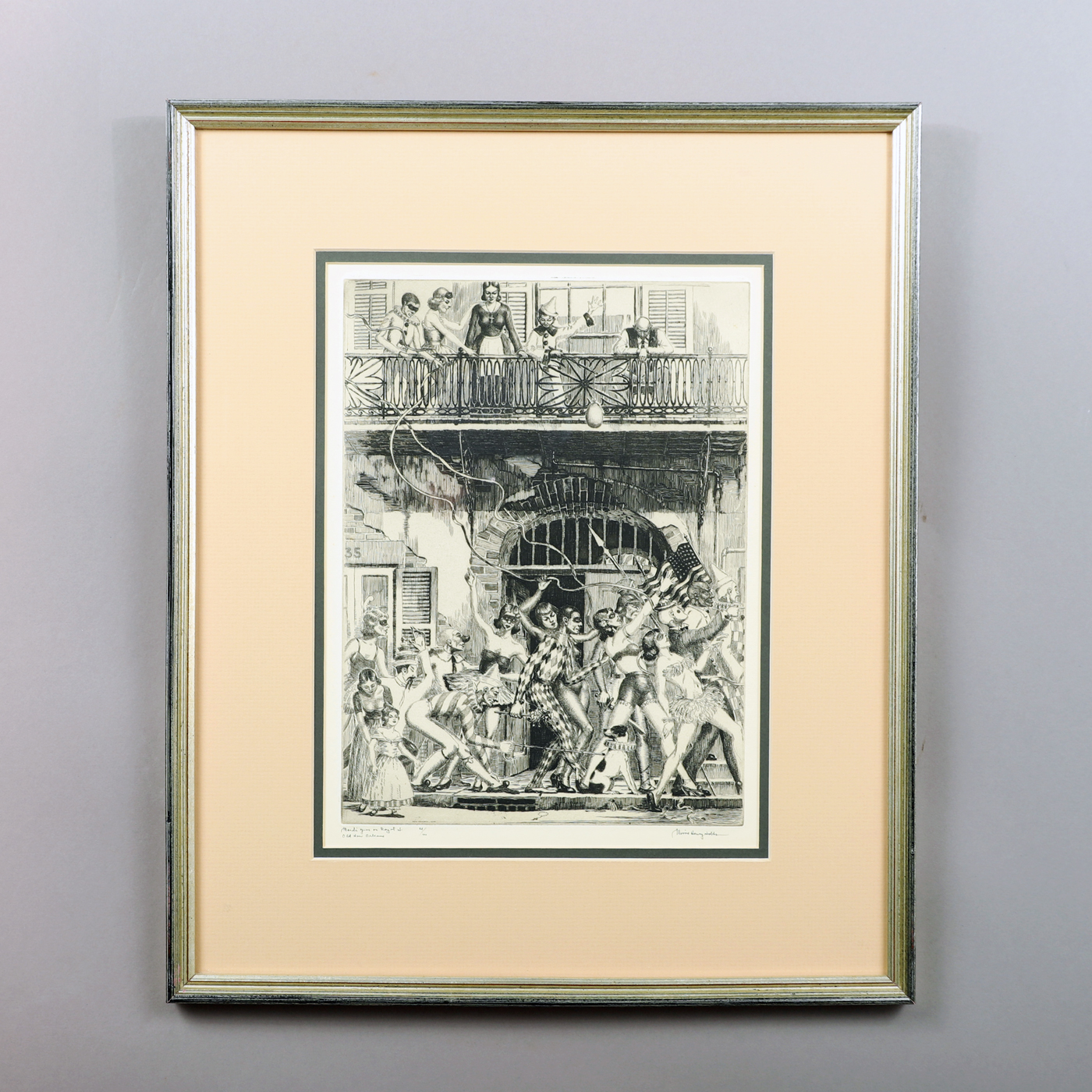
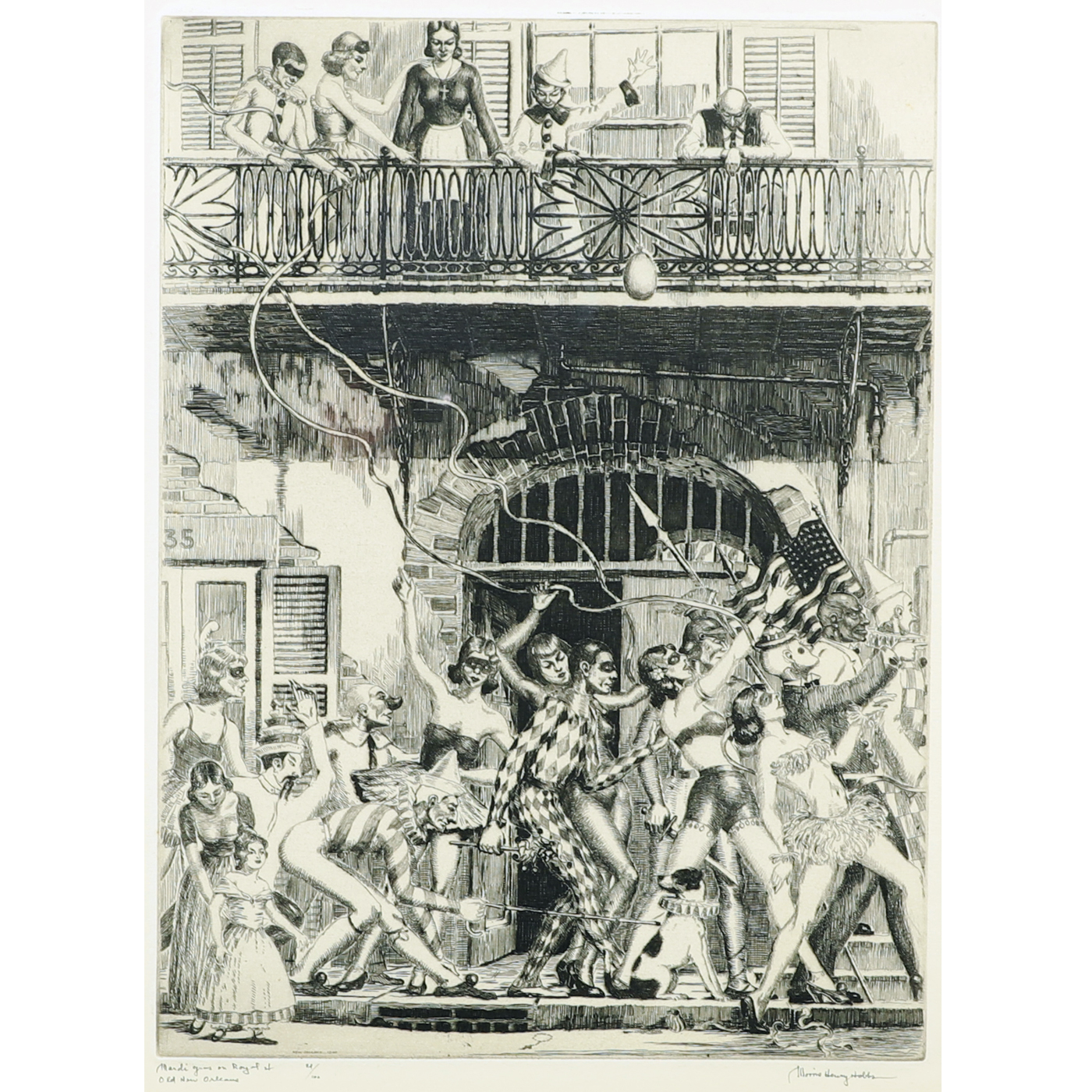
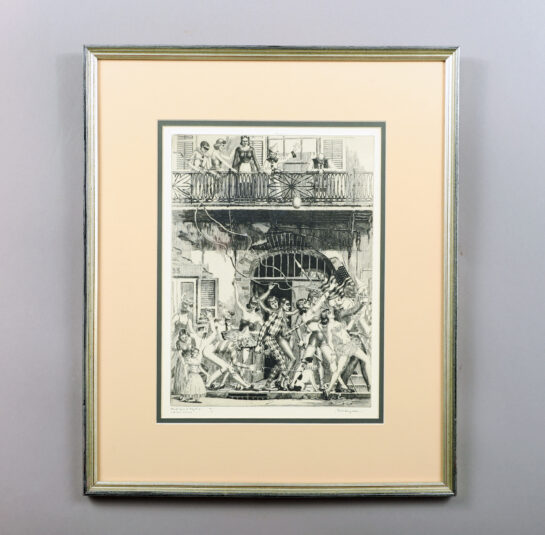
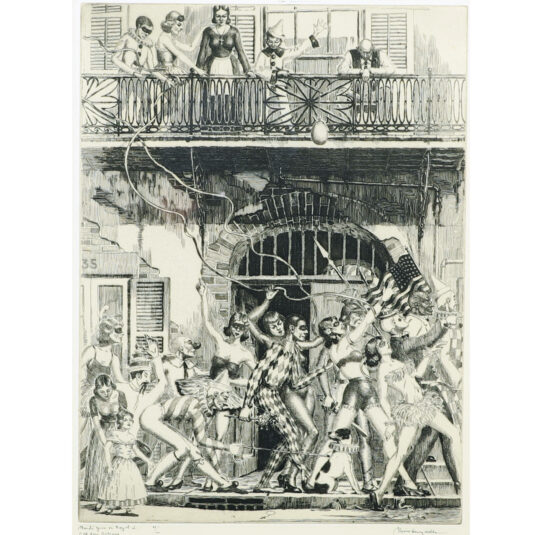
Mardi Gras on Royal St. Old New Orleans, 1940
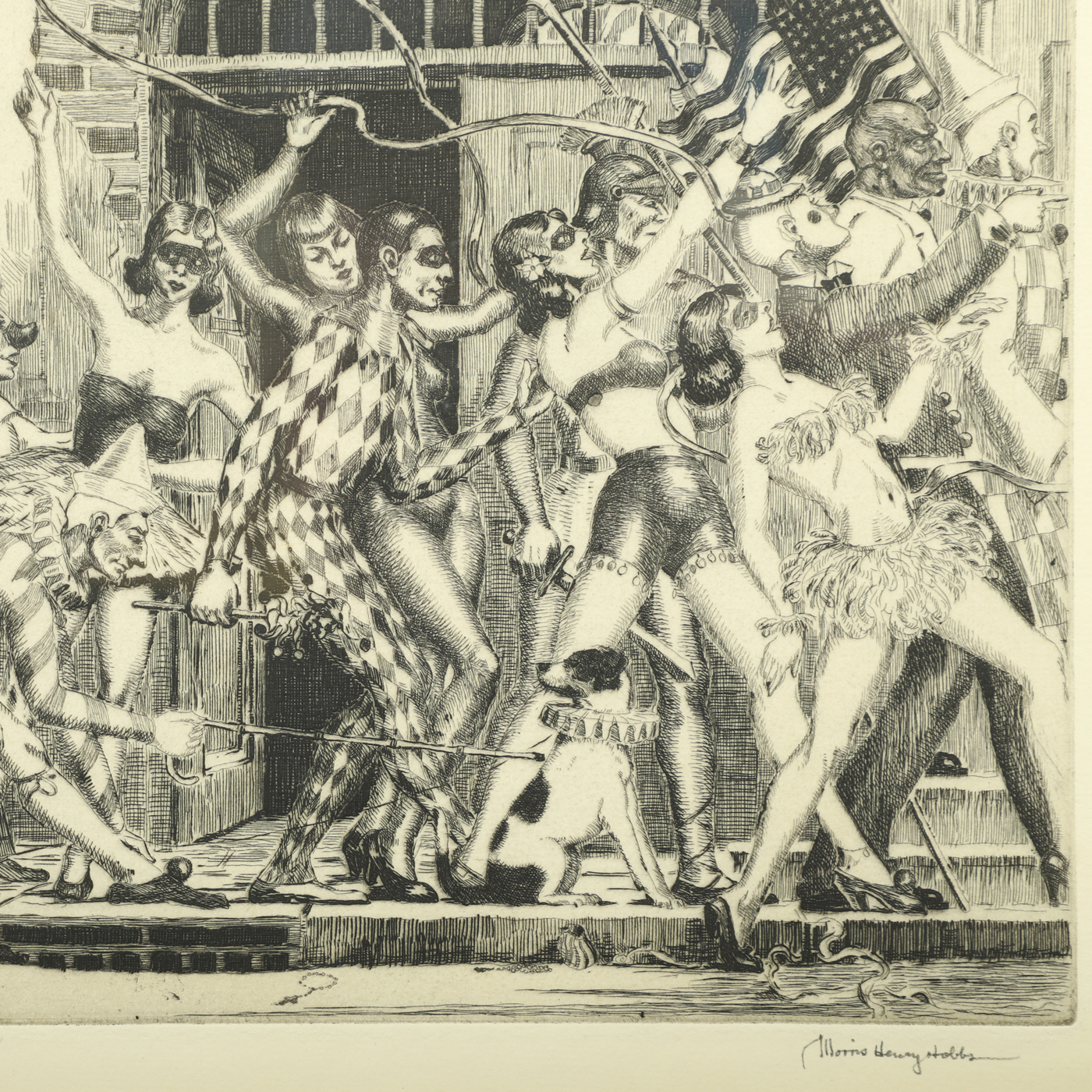
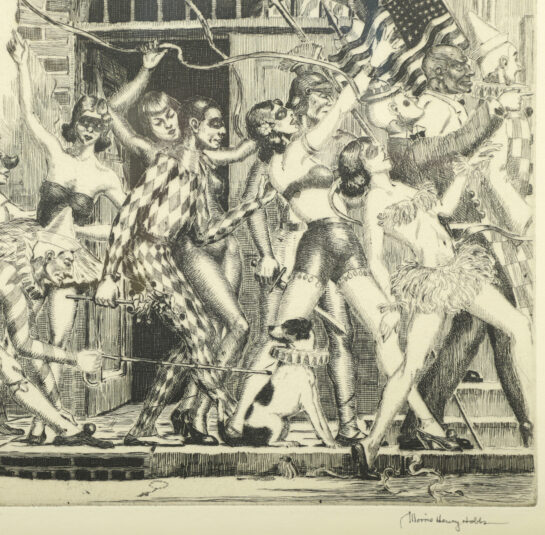
Pencil signed (l.r.): Morris Henry Hobbs
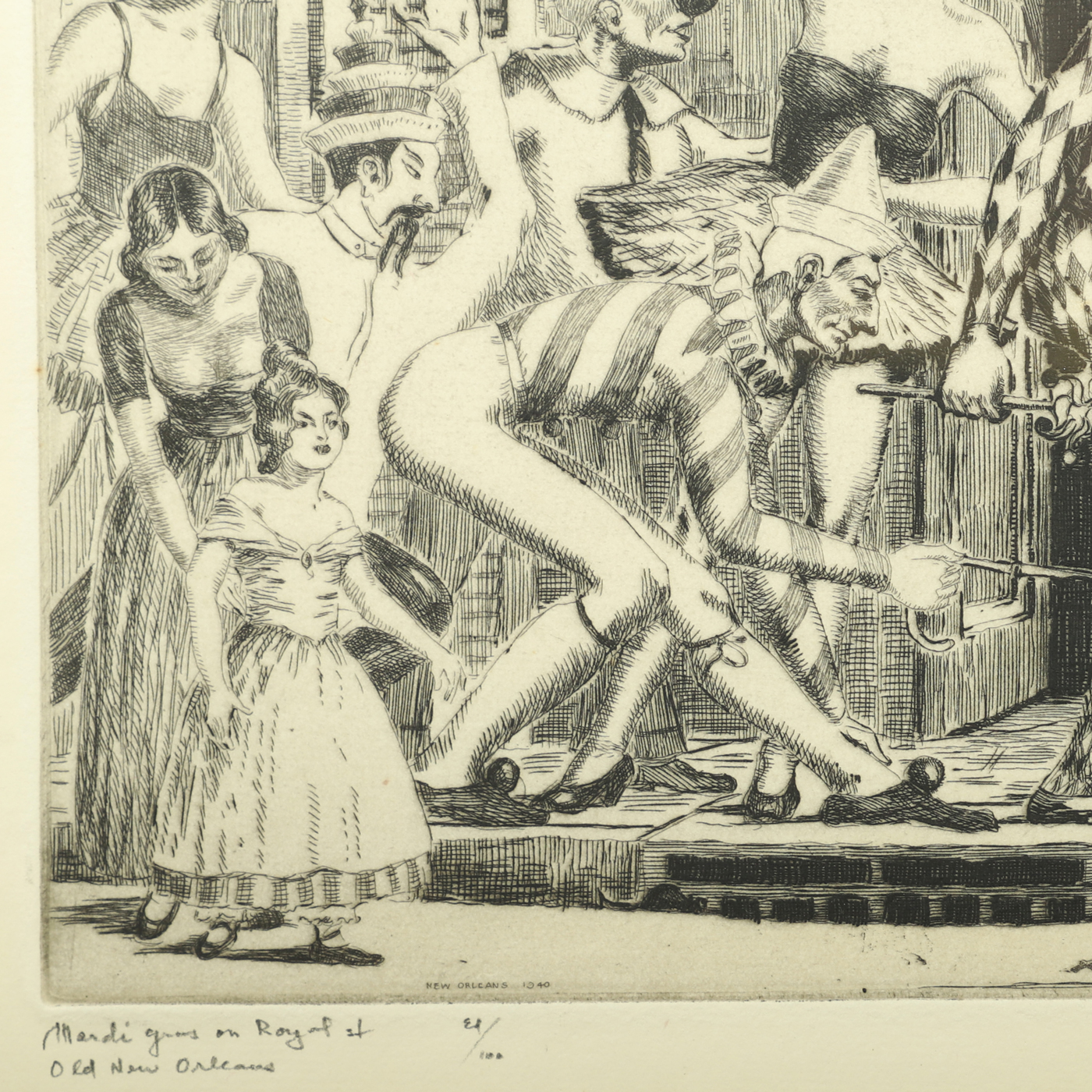
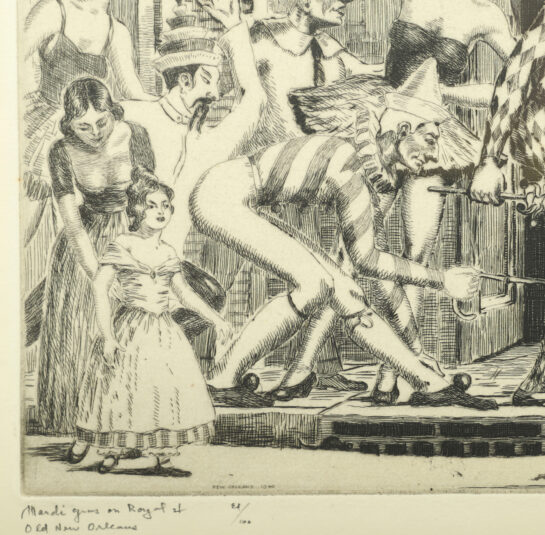
Pencil Titled and editioned (l.l.): Mardi Gras on Royal St. / Old New Orleans, Ed / 100
Dated New Orleans 1940 within plate (l.l.)
Dry Point Etching on wove paper, framed.
12 11/16 x 9 3/8″ (sight), 16 5/16″ x 10 9/16″ (frame)
Excellent condition
Provenance: Private Collection, Maine.
Morris Henry Hobbs (1892–1967) was an acclaimed American master etcher, printmaker, and architect heavily celebrated for his detailed architectural prints and landmark documentation of the New Orleans French Quarter. As a highly precise craftsman, he captured changing urban landscapes across the Midwest and Southern United States.
Born on January 1, 1892, in Rockford, Illinois, Hobbs was the son of a watchmaker, from whom he inherited a meticulous eye for minute detail. He raised himself in Chicago and took classes at the Art Institute of Chicago, beginning a career as an architectural draftsman by age 17.
By the late 1920s and 1930s, Hobbs focused strictly on fine arts, creating detailed etchings, drypoints, and engravings. His architectural background heavily influenced his art, lending structural clarity to his landscape and structural compositions. His prestige grew rapidly. The Smithsonian Institution honored him with two solo exhibitions of his prints in 1930.
In 1938, Hobbs moved to New Orleans for what was meant to be an extended visit but became his permanent home. Captivated by the city’s historic charm and decaying architecture, he established a studio and spearheaded a massive ten-year undertaking to document the historic French Quarter.
His notable Old New Orleans series (1938–1939) served as both high art and a vital tool for historical preservation, capturing buildings that faced demolition. He went on to found the Society of Louisiana Etchers and worked as an architectural designer for several top regional firms.
Hobbs passed away in New Orleans on January 24, 1967. Today, his work is held in permanent collections across the nation, including the Smithsonian American Art Museum, the Metropolitan Museum of Art, and the Historic New Orleans Collection.